
Introduction
Consider this: The blazing sign of a fast-food business screams your name as you hurry through a hectic day. You’re eating a crispy burger, salty fries, and a sweet drink in a matter of minutes. It’s delicious, practical, and, let’s face it, addictive. What transpires in your body following that gratifying bite, though?
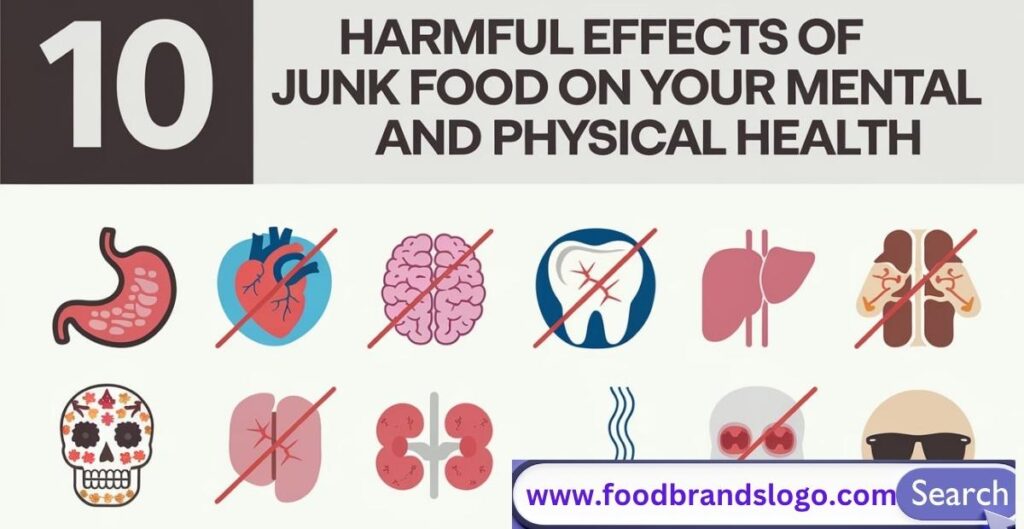
Junk food has a long list of health hazards, despite its deliciousness. These foods are more dangerous than they appear, causing everything from depression to diabetes. We’ll reveal the ten detrimental impacts of junk food on your physical and emotional health in this blog post so you can make wise decisions for your wellbeing.
Why Is Eating Junk Food Bad?
When we talk about junk food, let’s first comprehend what we’re actually eating.
Fast food such as burgers, fries, sugary drinks, cakes, biscuits, and nearly anything that is highly processed, fried, or loaded with sugar, salt, bad fats, and refined carbs are all considered junk food. It’s a calorie-dense diet that lacks important elements including fiber, vitamins, and minerals.
Eating it on occasion might not be harmful, but incorporating it into your diet on a daily basis causes a number of health issues. Junk food has negative affects on your organs, intellect, mood, and even skin in addition to making you gain weight.
Let’s examine the top ten harmful consequences of junk food in more detail.
1. Diabetes
It is commonly known that junk food contributes to diabetes, particularly type 2 diabetes.
The majority of junk food is low in fiber and high in added sugars and refined carbohydrates. Your blood sugar levels rapidly rise as a result. Insulin is a hormone that helps regulate blood sugar levels, but it can cause resistance in your body over time. Insulin resistance and type 2 diabetes may eventually result from this.
For instance, about 35 grams, or almost nine teaspoons, of sugar can be found in a single can of soda. Regular consumption of this type of sugar overload strains the pancreas and reduces the effectiveness of insulin.
Quick Fact: Regular users of sugar-filled beverages are 26% more likely to acquire type 2 diabetes.
2. Cardiovascular Problems
When junk food becomes a regular part of your diet, your heart health suffers greatly.
Salt, saturated fats, and trans fats raise LDL (bad) cholesterol while lowering HDL (good) cholesterol. Your arteries narrow and blood flow is restricted as a result of plaque accumulation, which raises blood pressure and causes heart disease.
The main offenders are fried chicken, processed meats, and salty snacks. These elevate the risk of a heart attack or stroke, cause inflammation, and raise triglyceride levels.
Did You Know? Your blood vessel function can be momentarily compromised for hours by a single fast food meal!
3. High Cholesterol
Your body needs modest amounts of cholesterol, a fatty molecule, but too much of the wrong sort can lead to serious issues.
Junk food increases LDL cholesterol, which can clog arteries, especially when it contains red meat, butter, and full-fat dairy. Additionally, it raises your blood’s levels of triglycerides, another harmful fat.
Conversely, junk food lacks the fiber and omega-3 fatty acids that lower cholesterol. Your body finds it difficult to stay in balance if you don’t eat a diet high in nutrients.
Atherosclerosis, a significant risk factor for heart disease and stroke, develops as a result of this imbalance over time.
4. Obesity
Weight gain, which frequently results in obesity, is one of the most obvious negative impacts of junk food.
Junk food is high in calories but low in nutrients. It encourages you to eat more without feeling full by playing tricks on your brain with flavors that are addicting. This causes overeating by interfering with natural hunger signals.
For many people, a large burger lunch with fries and beverage can easily surpass 1,500 calories, which is nearly enough for a whole day.
Obesity isn’t just a cosmetic concern—it increases your risk of:
- Type 2 diabetes
- Heart disease
- Joint pain
- Sleep apnea
The Bottom Line: Regular consumption of fast food is strongly associated with childhood and adult obesity worldwide.
5. Kidney Damage
Your kidneys are essential for controlling blood pressure, balancing fluids, and filtering waste. Sadly, junk food makes their work more difficult.
Junk food that contains too much salt raises blood pressure, which puts stress on the kidneys. Over time, high salt levels harm kidney tissues by upsetting electrolyte balance.
Furthermore, phosphate additions, which are used in many junk foods to improve flavor and shelf life, can be harmful in high concentrations, particularly for those who already have renal issues.
Chronic kidney disease (CKD), a quiet yet dangerous ailment, can result from prolonged exposure.
6. Liver Disease
Nonalcoholic fatty liver disease (NAFLD) is one of the most underappreciated risks associated with junk eating.
Junk food contains fructose, a sugar that is converted to fat by the liver and is present in sodas and other sweets. Excessive consumption of this fat causes it to build up in the liver, which hinders its functionality.
Liver failure, liver scarring, and inflammation are all possible outcomes of NAFLD.
Furthermore, your liver’s capacity to detoxify and repair itself is diminished if your diet is deficient in fiber, antioxidants, and healthy fats.
7. Dental Cavities
“Sugar rots your teeth,” as the adage goes. It is unquestionably true.
Cakes, pastries, chocolates, and sugary drinks can encourage oral microorganisms. Cavities, plaque, and ultimately tooth decay are caused by the acid these bacteria create, which erodes tooth enamel.
Acidic drinks are dangerous since they immediately destroy enamel in addition to providing sugar.
Gum disease and persistent foul breath are other consequences of poor oral health, which can negatively impact your self-esteem and general health.
Pro Tip: You may keep your smile intact by substituting fruits or nuts for sugary snacks.
8. Cancer
Long-term junk food consumption can increase your risk of developing a number of malignancies, however this isn’t always evident.
The World Health Organization considers processed meats, such as bacon and sausages, to be carcinogenic. They contain nitrates and preservatives that can combine to create substances that cause cancer.
Furthermore, acrylamide, a potentially carcinogenic substance created during high-temperature cooking, is produced by deep-fried foods.
When you combine that with the inflammation that trans fats produce, you’re in for a lot of problems.
Cancer risk can be decreased by eating a diet high in anti-inflammatory foods including green tea, berries, and vegetables.
9. Depression
We frequently keep mental and physical health apart, but junk eating is bad for both.
Junk food diets have been directly linked in studies to mood swings, anxiety, and sadness.
Magnesium, omega-3 fatty acids, and vitamins (particularly B-vitamins), which are essential for brain function, are absent from these diets.
Additionally, sugar dips following sweets consumption might result in weariness and irritation. Poor diet-induced inflammation also affects neurotransmitters such as serotonin, the “feel-good” hormone.
Mood Tip: Consuming a well-balanced diet rich in lean protein, leafy greens, and whole grains helps maintain energy and mood.
10. Skin Problems
It’s true that junk food can harm your skin.
Acne, pimples, and inflammation can be brought on by a diet heavy in sugar, dairy, and processed oils. Junk food causes an increase in sebum production, which is a major contributing factor to clogged pores.
Antioxidants like vitamin C, which aid in repairing damaged skin and fostering a clear complexion, are also absent from processed foods.
You’re not dreaming if you’ve ever observed that eating greasy food makes your face oily.
What you eat is reflected in your skin. Your glow can be greatly enhanced by selecting foods high in fiber, omega-3 fatty acids, and zinc.
Conclusion
Let’s recap the 10 harmful effects of junk food:
- Diabetes
- Cardiovascular problems
- High cholesterol
- Obesity
- Kidney damage
- Liver disease
- Dental cavities
- Cancer
- Depression
- Skin problems
Junk food obviously has negative effects on your entire body, from your heart to your head, and isn’t simply bad for your waist.
The good news is that you are in charge. You may safeguard your health and feel better every day by choosing healthier foods, such as substituting roasted vegetables for fries, water for sugary drinks, and fruits for sweets.
Junk food doesn’t have to be completely avoided. Moderation, mindfulness, and selecting nutrient-dense substitutes that promote mental and physical well-being are crucial.
FAQs
How frequently is junk food safe to consume?
For most healthy people, occasional indulgence—once a week or less—is acceptable. However, chronic health problems can swiftly result from daily usage.
Can I eat healthier later to undo the impacts of junk food?
With a healthy diet, regular exercise, and positive lifestyle choices, some harm can be undone. However, prevention is the best course of action because long-term complications like diabetes or liver damage may be irreversible.
Is processed food from the grocery store superior to fast food?
If consumed frequently, both may be detrimental. While processed grocery goods frequently contain preservatives and excess sodium, fast food typically has more calories and bad fats.
Why does junk food have an impact on mental health and mood?
Important elements that assist brain function, such as omega-3s, magnesium, and vitamins, are absent from junk food. Moreover, it results in blood sugar spikes and inflammation, both of which can lead to mood issues.
What are some simple ways to satisfy cravings for junk food?
Try:
Fruits rather than candies
Popcorn that has been air-popped rather than chips
Instead of cookies, use nuts and seeds.
Smoothies as an alternative to milkshakes
Using whole-grain wraps rather than burgers